
How AI and Machine Learning Are Shaping Mobile Apps?
April 19, 2025
By Cloudester Team
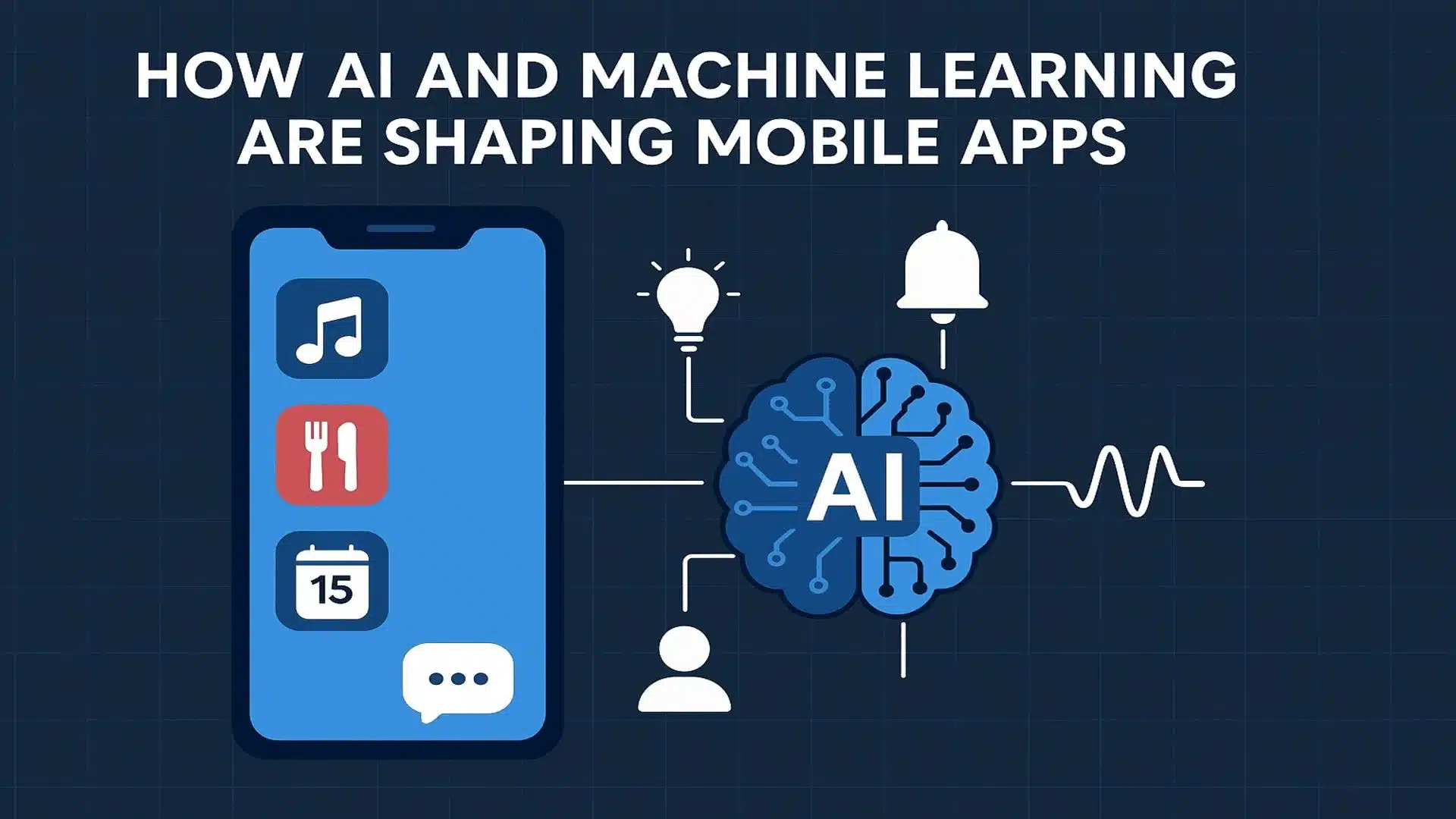
Image Credit – ChatGPT
Imagine opening your favorite mobile app and being greeted with exactly what you need before you even ask. Whether it is a song you enjoy, a suggestion for your next meal, or a reminder for a meeting you almost forgot, it feels as if the app understands you. This is not magic. It is Artificial Intelligence (AI) and Machine Learning (ML) silently working behind the scenes.
The mobile app development landscape has evolved far beyond simple notifications and user data collection. As we move through 2024 and beyond, AI-driven app development is transforming how users experience digital products. Applications are no longer just tools; they have become intelligent companions that adapt, predict, and personalize.
With AI and ML, mobile apps are now faster, smarter, and far more intuitive. This transformation is redefining how businesses engage users and how users interact with technology.
Let us explore how AI and Machine Learning are reshaping modern app development and why this revolution matters now more than ever.
Understanding the Role of AI and Machine Learning in Modern Mobile App Development
1. AI and ML in Mobile App Development
AI refers to systems that simulate human intelligence, including learning, reasoning, and decision-making. Meanwhile, Machine Learning, a subset of AI, allows these systems to learn from data patterns and improve performance without explicit programming.
In mobile applications, AI enables apps to understand user behavior, preferences, and habits. Over time, the app learns and evolves to deliver more relevant experiences. This is why apps like Netflix, Spotify, and Instagram feel so intuitive. They rely on machine learning algorithms that continuously adapt based on user interactions.
2. Personalization That Feels Effortless
One of the most noticeable effects of AI in mobile apps is personalization. Have you ever wondered how your shopping app seems to display exactly what you were thinking of buying? Or how your fitness app adjusts workouts automatically based on your progress? That is AI at work.
By analyzing huge volumes of user data, AI creates personalized experiences for each individual. It adjusts app content, predicts future needs, and even tailors layouts to suit user preferences. As a result, AI-powered personalization increases engagement and boosts retention rates.
In the competitive US market, where attention spans are short and expectations are high, such personalization has become essential for success.
Custom AI Software Development Solution For Enterprises
3. Smarter Search and Voice Interaction
AI has also revolutionized how users search for information and communicate with apps. Through Natural Language Processing (NLP), mobile applications can now interpret human language and respond naturally.
Whether users interact with Siri, Google Assistant, or in-app voice search, NLP enhances accessibility and convenience. Moreover, voice commands have become vital for hands-free usage and are particularly valuable for multitasking users who need efficiency and speed.
4. Automation That Saves Time
Today’s mobile apps go far beyond convenience. With AI, many routine tasks are now automated. For example, check-in apps remind you automatically, while real estate platforms send notifications about property changes in real time.
This intelligent automation not only simplifies user experience but also boosts satisfaction and loyalty. Consequently, AI-powered mobile applications can predict user intent, complete actions proactively, and deliver consistent, time-saving value.
5. AI-Based Mobile App Security
Security is one of the most critical areas where AI has made a difference. In an era of rising cyber threats, mobile users need better protection for their data. AI-driven systems detect anomalies, flag unauthorized access, and respond instantly to suspicious activity.
Additionally, AI enhances biometric authentication such as fingerprint and facial recognition. This helps protect sensitive data, especially in banking, healthcare, and e-commerce apps. In short, AI in mobile app security builds trust and safeguards digital ecosystems.
6. Augmented and Virtual Reality Enhanced by AI
Applications combining AI with AR or VR have opened exciting opportunities across entertainment, retail, and education. For example, IKEA Place uses AR to preview furniture in real spaces, while educational platforms deliver immersive lessons.
AI strengthens these experiences by improving object recognition, adjusting visuals in real time, and learning from user interactions. As a result, the combination of AI with extended reality (XR) expands creative possibilities and delivers deeply engaging app experiences.
7. Chatbots and AI-Powered Support
Long customer service queues are becoming a thing of the past. With AI-powered chatbots, users receive instant, round-the-clock support. These virtual assistants answer queries, guide users, and resolve issues without human involvement.
Moreover, each conversation helps chatbots learn and improve, making future interactions more accurate and efficient. This not only saves time for users but also reduces business costs while improving satisfaction and loyalty.
8. Healthcare and Fitness: Smarter, Safer, Healthier
AI and machine learning in healthcare are reshaping the wellness industry. Health and fitness apps now track heart rate, sleep, calorie intake, and exercise routines. They also deliver personalized recommendations and early alerts about potential health risks.
By identifying trends in user data, AI helps detect irregularities that may otherwise go unnoticed. In the US, where lifestyle-related health challenges are common, these intelligent tools support prevention and promote healthier living.
What the Future Holds
The impact of AI in mobile app development is only beginning. Developers are now building self-learning apps that evolve without constant manual updates. Soon, interfaces will adapt dynamically based on user moods, habits, and device environments.
Moreover, hyper-personalization will make each app experience feel unique. Behind the scenes, AI will optimize performance, fix bugs automatically, and streamline update cycles.
Nevertheless, challenges remain. Data privacy, algorithmic bias, and compliance regulations will continue to test developers. Therefore, ethical AI practices and transparency must guide innovation for sustainable growth.
Conclusion
Artificial Intelligence and Machine Learning have progressed from experimental features to foundational technologies. They now shape how mobile apps are designed, how users interact, and how businesses engage customers.
Whether through personalized recommendations, enhanced security, or predictive automation, AI has become central to innovation in mobile app development.
For businesses, adopting AI-driven mobile app development is no longer a choice. It is the only path forward in a competitive digital landscape.
Cloudester Software helps businesses across the USA build smart, scalable, and secure applications. With deep expertise in machine learning for mobile applications, Cloudester designs solutions that elevate performance and user experience alike.
The future of mobile apps is intelligent. And the future begins today.
Back
Latest posts




July 30, 2026