
September 8, 2026

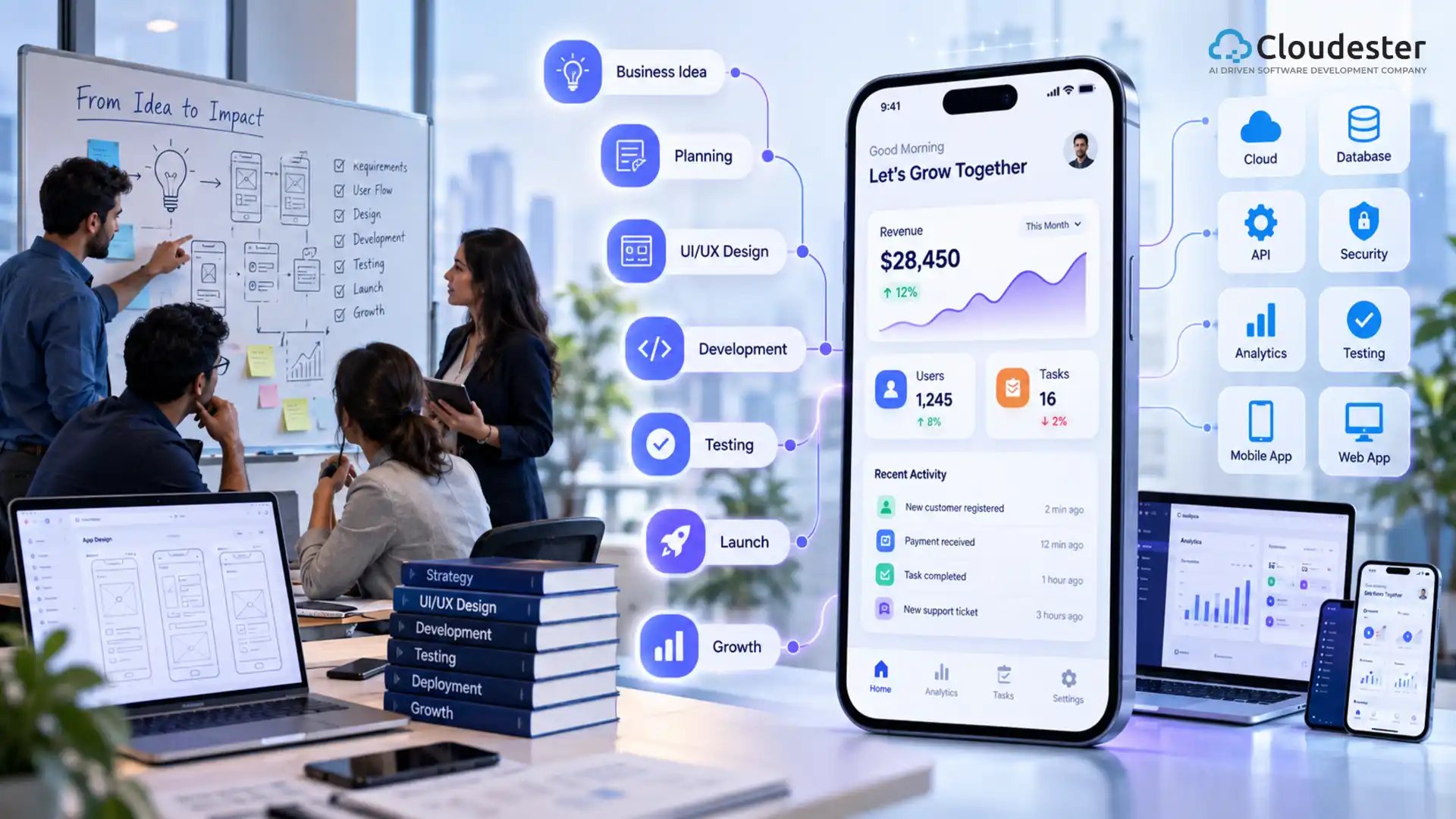
AI Generated. Credit: ChatGPT
Launching a new product starts with one important question: What will it cost? Understanding MVP Development Cost helps startups and businesses plan their budgets, avoid unnecessary expenses, and validate product ideas before investing in a full-scale application.
An MVP, or Minimum Viable Product, includes only the essential features needed to solve a core problem for early users. Instead of spending months building every possible feature, companies release a smaller version, collect feedback, and improve the product based on real user behavior.
The final cost depends on several factors, including feature complexity, platform choice, development approach, team experience, and project timeline. A well-planned MVP often saves both time and money while reducing business risk.
MVP Development Cost refers to the total investment required to design, build, test, and launch a Minimum Viable Product with essential features. The cost varies depending on project complexity, development team, technology stack, integrations, and business requirements, making proper planning and estimation essential before development begins.
A Minimum Viable Product (MVP) is the first functional version of a software product that includes only the features required to solve a specific customer problem.
Instead of developing every planned feature, businesses focus on creating a usable product that reaches the market quickly. This approach allows companies to validate ideas before making a larger investment.
Many successful technology companies followed this strategy during their early stages. Their initial products were simple, yet they solved a real customer need.
An MVP helps businesses:
For startups, building an MVP is often the smartest way to test market demand before committing significant resources.
There is no single answer because every project has different requirements. However, understanding common pricing ranges makes budgeting much easier.
Typical MVP Development Cost falls into three categories.
| MVP Complexity | Estimated Cost | Typical Timeline | Best For |
|---|---|---|---|
| Simple MVP | $15,000 – $35,000 | 6–10 weeks | Landing platforms, internal tools, basic web applications |
| Medium Complexity MVP | $35,000 – $80,000 | 3–5 months | SaaS products, marketplaces, customer portals |
| Complex MVP | $80,000 – $200,000+ | 5–9 months | AI applications, healthcare platforms, FinTech solutions, enterprise software |
These estimates may vary depending on several factors, including:
Projects involving artificial intelligence, payment processing, healthcare compliance, or enterprise integrations generally require larger budgets because they demand specialized expertise, additional testing, and stronger security measures.
| Factor | Simple MVP | Medium MVP | Complex MVP |
|---|---|---|---|
| Number of Features | 5–10 | 10–20 | 20+ |
| UI/UX Design | Basic | Custom | Premium User Experience |
| Backend Complexity | Low | Medium | High |
| User Roles | Single Role | Multiple Roles | Advanced Permissions |
| API Integrations | Few | Moderate | Extensive |
| Security | Standard | Enhanced | Enterprise Grade |
| Scalability | Moderate | High | Very High |
| Testing | Functional Testing | Comprehensive QA | Enterprise-Level QA |
| Estimated Development Time | 6–10 Weeks | 3–5 Months | 5–9 Months |
| Estimated Cost | $15K–$35K | $35K–$80K | $80K–$200K+ |
Development rates vary significantly across the world. While hourly rates are an important factor, experience, communication, and code quality should always influence your decision.
| Country/Region | Average Hourly Rate | Best For |
|---|---|---|
| United States | $100–$250+ | Enterprise software, complex products |
| Canada | $80–$180 | Mid-size and enterprise applications |
| United Kingdom | $90–$180 | Financial and enterprise solutions |
| Western Europe | $70–$160 | Healthcare, SaaS, enterprise software |
| Eastern Europe | $40–$90 | High-quality outsourcing |
| India | $25–$70 | Cost-effective MVP development |
The right development partner balances affordability with technical expertise, communication, and long-term support rather than focusing only on hourly rates.
Two products may appear similar on the surface but require very different engineering efforts.
For example, a basic food delivery application might allow users to browse restaurants and place orders. An advanced version could include live GPS tracking, AI-powered recommendations, multiple payment gateways, customer loyalty programs, restaurant dashboards, delivery partner management, analytics, and fraud detection.
Although both products belong to the same category, the second requires significantly more development time, specialized expertise, and testing. As a result, the MVP software development cost increases substantially.
Understanding these differences helps founders create realistic budgets instead of relying on estimates from unrelated projects.
Many founders assume building every planned feature from the beginning increases their chances of success. In reality, launching a focused MVP usually delivers better results with lower financial risk.
A well-planned MVP offers several advantages:
According to industry research, startups that validate their ideas early are better positioned to refine their products based on actual user behavior instead of assumptions. This approach often leads to smarter investments and higher long-term success.
No two MVPs cost the same because every product has unique business goals, technical requirements, and user expectations. Understanding the key cost drivers helps you create a realistic budget and avoid unexpected expenses during development.
The overall complexity of your application has the biggest impact on MVP Development Cost. A simple booking app requires fewer development hours than an AI-powered analytics platform or a healthcare solution with regulatory compliance.
As business logic becomes more advanced, developers spend more time building, testing, and optimizing the application.
Every feature increases development time. One of the biggest mistakes startups make is trying to build every idea into the first release.
A successful MVP focuses only on features that solve the primary customer problem.
| Feature Scope | Impact on Cost |
|---|---|
| Core Features Only | Low |
| Moderate Feature Set | Medium |
| Large Feature List | High |
Your choice of platform directly affects the cost to build an MVP.
If your goal is rapid validation, a web application or cross-platform solution often delivers better value than developing separate native apps.
Great design is more than visual appeal. It improves usability, increases customer satisfaction, and reduces user frustration.
Basic templates reduce costs, while custom branding, animations, interactive dashboards, and advanced user experiences increase development time.
Your selected technologies influence both development speed and long-term maintenance.
Modern frameworks such as React, Angular, Node.js, .NET, Python, Flutter, and React Native can accelerate development when chosen for the right use case.
Choosing scalable technologies early also reduces future redevelopment costs.
Many MVPs depend on external services instead of building everything from scratch.
Common integrations include:
Each integration requires implementation, testing, and maintenance, which contributes to the overall MVP development pricing.
Development rates vary significantly across regions. Businesses often compare local hiring with outsourcing before starting a project.
| Development Region | Typical Hourly Rate |
|---|---|
| North America | $100–$250+ |
| Western Europe | $80–$180 |
| Eastern Europe | $40–$90 |
| Asia | $25–$70 |
Lower hourly rates do not always mean lower project costs. Experience, communication, quality assurance, and project management also influence the outcome.
Applications handling financial transactions, healthcare records, or personal information require stronger security measures.
Compliance standards such as GDPR, HIPAA, PCI DSS, or SOC 2 increase development effort because they require secure architecture, encryption, audit logging, and extensive testing.
One of the most effective ways to control your budget is to prioritize features based on business value. Every additional feature increases design, development, testing, and maintenance effort.
A simple prioritization framework includes:
| Priority | Description | Include in MVP? |
|---|---|---|
| Must Have | Essential for solving the core problem | Yes |
| Should Have | Important but not critical for launch | Later Phase |
| Could Have | Nice-to-have enhancements | Future Updates |
| Won’t Have | Features planned for long-term roadmap | No |
This approach helps startups launch faster, collect user feedback sooner, and avoid investing in features that customers may never use.
Breaking development into phases makes budgeting more accurate and helps identify where your investment goes.
| Development Stage | Main Activities | Estimated Share of Budget |
|---|---|---|
| Product Discovery | Research, workshops, requirement gathering | 5–10% |
| UI/UX Design | Wireframes, prototypes, interface design | 10–15% |
| Frontend Development | User interface development | 20–25% |
| Backend Development | Business logic, APIs, databases | 25–35% |
| API Integration | Third-party services | 10–15% |
| Quality Assurance | Testing and bug fixing | 10–15% |
| Deployment | Cloud setup and production launch | 5% |
A structured development process also reduces delays because every phase builds on the previous one.
Development is only one part of the overall investment. After launch, several ongoing expenses help keep your application secure, reliable, and competitive.
Planning for these operational costs early helps prevent budget surprises after your MVP goes live.
Different products require different levels of engineering effort. The following estimates provide a general comparison.
| Product Type | Typical Cost Range | Estimated Timeline |
|---|---|---|
| SaaS Platform | $30,000–$80,000 | 3–5 Months |
| Marketplace | $40,000–$100,000 | 4–6 Months |
| E-commerce Platform | $25,000–$70,000 | 3–5 Months |
| Healthcare Application | $70,000–$180,000+ | 6–9 Months |
| FinTech Application | $80,000–$200,000+ | 6–10 Months |
| AI-Powered Application | $60,000–$180,000+ | 5–8 Months |
| Social Networking App | $40,000–$120,000 | 4–6 Months |
The final MVP app development cost depends on your feature requirements, integrations, and long-term scalability goals.
| Industry | Typical Cost Range | Primary Cost Drivers |
|---|---|---|
| SaaS | $30,000–$80,000 | Subscriptions, dashboards, user management |
| Healthcare | $70,000–$180,000+ | HIPAA compliance, security, integrations |
| FinTech | $80,000–$200,000+ | Payment gateways, fraud prevention, compliance |
| E-commerce | $25,000–$70,000 | Catalog, payments, inventory |
| Education | $25,000–$60,000 | Learning management, assessments |
| Logistics | $40,000–$120,000 | GPS tracking, fleet management |
| Real Estate | $30,000–$90,000 | Property listings, CRM integration |
| AI Applications | $60,000–$180,000+ | LLMs, machine learning, cloud computing |
This is one of the most common questions founders ask before starting a software project. Both approaches have advantages, but the right choice depends on your budget, timeline, and internal expertise.
| Factor | In-House Team | Outsourced MVP Development Company |
|---|---|---|
| Initial Cost | High | Lower |
| Hiring Time | Long | Minimal |
| Development Speed | Depends on hiring | Usually Faster |
| Scalability | Limited | Easy to Scale |
| Technical Expertise | Depends on Team | Access to Specialists |
| Project Management | Internal | Shared Responsibility |
| Pros | Cons |
|---|---|
| Complete control over the team | Higher hiring costs |
| Direct communication | Long recruitment process |
| Deep product knowledge | Higher infrastructure expenses |
| Long-term ownership | Difficult to scale quickly |
| Pros | Cons |
|---|---|
| Lower startup MVP cost | Requires careful vendor selection |
| Access to experienced specialists | Time zone differences may exist |
| Faster project delivery | Communication processes must be defined |
| Flexible team scaling | Less day-to-day oversight |
Many startups choose an experienced MVP development company because it provides access to designers, developers, QA engineers, and project managers without the overhead of building an internal team from scratch.
Accurate MVP cost estimation starts with understanding your business goals, target users, and must-have features. Instead of guessing a budget, follow a structured approach to estimate development costs more realistically.
Clearly identify the problem your product will solve. A focused objective prevents unnecessary features and keeps development aligned with user needs.
Include only the features required for the first release. Everything else can be added after collecting feedback from early users.
Examples of core MVP features include:
Decide whether your MVP should launch as a web application, mobile app, or cross-platform solution. The right platform depends on your audience, business goals, and available budget.
Although an MVP focuses on essential features, the architecture should support future growth. Choosing scalable technologies now reduces redevelopment costs later.
Work with an experienced development partner to receive a transparent estimate that includes design, development, testing, deployment, and post-launch support.
Although every project is different, the following framework can help estimate your initial budget.
| Project Size | Estimated Hours | Estimated Cost Range |
|---|---|---|
| Simple MVP | 300–600 Hours | $15,000–$35,000 |
| Medium MVP | 700–1,200 Hours | $35,000–$80,000 |
| Complex MVP | 1,300–2,500+ Hours | $80,000–$200,000+ |
Your final estimate depends on feature complexity, integrations, security requirements, technology stack, and the experience of your development team.
Lowering costs should never come at the expense of product quality. Instead, focus on smart planning and efficient execution.
Many startups exceed their budgets because of avoidable planning mistakes rather than technical challenges.
| Mistake | Impact |
|---|---|
| Adding too many features | Longer development time and higher costs |
| Skipping product discovery | Poor planning and frequent changes |
| Ignoring user feedback | Building features users do not need |
| Choosing the wrong technology | Higher maintenance and redevelopment costs |
| Delaying testing | Expensive bug fixes before launch |
| Hiring solely based on the lowest price | Lower quality and project delays |
A successful MVP focuses on solving one core problem exceptionally well instead of trying to satisfy every possible user request.
After working on software projects across different industries, several patterns consistently lead to successful MVP launches.
Companies that treat their MVP as a learning tool rather than a finished product usually make better product decisions and use their budgets more efficiently.
Selecting the right MVP development partner has a direct impact on your project’s quality, timeline, and budget.
Cloudester helps startups and enterprises transform product ideas into scalable MVPs through a structured development process and transparent project management.
Our MVP development services include:
With an Agile approach, experienced engineers, and a focus on business outcomes, Cloudester delivers MVP solutions that help businesses validate ideas faster while controlling development costs.
Before requesting a proposal from an MVP development company, prepare the following information.
Providing these details allows development teams to prepare a more accurate estimate and reduces unexpected changes during the project.
The average MVP Development Cost ranges from $15,000 to more than $200,000, depending on product complexity, feature requirements, technology stack, integrations, and development team location.
A simple MVP can be completed within six to ten weeks, while medium and complex products usually require three to nine months based on the project’s scope.
Major factors include application complexity, number of features, platform selection, UI/UX design, third-party integrations, security requirements, technology stack, and development team expertise.
For many startups, outsourcing reduces hiring expenses and provides access to experienced specialists. However, choosing a reliable development partner remains essential for long-term success.
Yes. Focus on essential features, validate your idea early, use Agile development, and choose scalable technologies. These practices help reduce unnecessary spending while maintaining product quality.
The right choice depends on your audience. Many startups launch a web MVP first because it is easier to update and validate before expanding to mobile platforms.
Product discovery helps identify user needs, define business goals, prioritize features, and reduce costly changes later in the development process.
Yes. AI features often require additional data processing, model integration, testing, cloud infrastructure, and specialized expertise, which increases the overall development budget.
A detailed estimate based on clear requirements is usually much more reliable than a rough quote. As requirements become more specific, cost accuracy improves significantly.
Evaluate technical expertise, industry experience, communication process, development methodology, client reviews, and post-launch support before making your decision.
Dropbox validated its product idea with a simple demonstration video before building a complete platform. Early interest confirmed market demand and helped shape future development.
The founders launched a basic website that allowed travelers to book accommodation in their apartment. Customer feedback guided future improvements and business expansion.
Uber’s first version focused on connecting riders with drivers in one city. Instead of launching every planned feature, the company validated its core concept before expanding globally.
Buffer initially launched with a simple landing page that measured customer interest before investing heavily in product development. This reduced business risk while validating demand.
These examples show that successful companies often begin with focused MVPs rather than feature-rich products.
Understanding MVP Development Cost helps businesses make informed investment decisions before writing the first line of code. Instead of focusing only on the lowest price, evaluate the factors that influence long-term success, including product complexity, technology choices, scalability, and development expertise.
A carefully planned MVP reduces business risk, accelerates market validation, and provides valuable customer feedback that shapes future product development. By prioritizing essential features and partnering with an experienced MVP development company, startups can launch faster, control costs, and build products that are ready to grow.




We specialize in creating high-performance web and mobile apps, seamlessly integrating them with your existing systems to enhance user experiences and streamline business operations.
85 Delancey St, New York NY 10002, United States