September 16, 2026

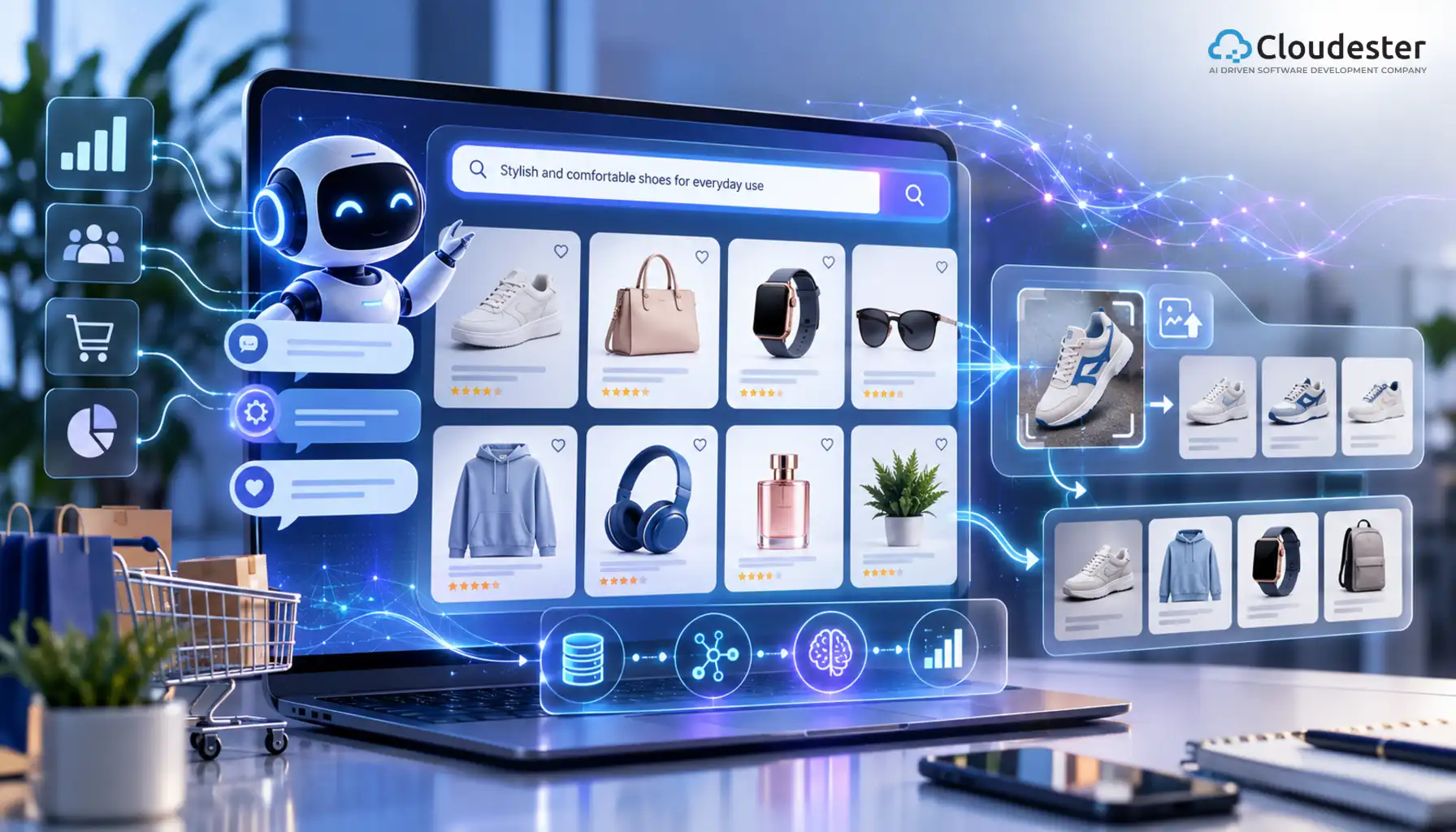
AI Generated. Credit: ChatGPT
Small business owners used to watch AI from the sidelines, figuring it was built for companies with data science teams and budgets they’d never match. That assumption no longer holds up. AI solutions for small businesses have gone from novelty to necessity in just a few years, mostly because the tools got affordable enough for anyone to set up in an afternoon.
Artificial intelligence for small businesses isn’t a plan at this point. It’s already showing up in how small teams handle customer questions, manage inventory, and decide what to do next.
Here’s what these tools actually are, why owners are adopting them, which ones matter most, and how to pick a starting point without wasting money.
AI solutions for small businesses are tools that automate tasks, analyze data, and support customers without requiring a technical team to run them. Instead of hiring someone new for repetitive work, a small business can hand that work to software that runs quietly in the background.
Here’s the short version of how it works. These tools take in data- customer messages, sales numbers, website traffic, whatever’s relevant- and use trained models to spot patterns or generate a response. The business doesn’t need to understand the math. It just needs to plug the tool in and let it run.
Knowing what these tools do is one thing. Knowing why owners are actually reaching for them tells the fuller story.
Hiring is expensive, and most small businesses can’t justify a full-time hire for work that only needs a few hours a week. AI takes on that overflow at a fraction of the cost.
Owners wear too many hats already, and time is their scarcest resource. AI automation for small businesses, scheduling, email, and data entry frees up hours that can go toward work only a person can actually do.
Customers expect fast answers, and a chatbot that responds at 11 pm on a Sunday can be the difference between a sale and a lost one, without anyone staffing a support desk around the clock.
When AI absorbs the repetitive parts of a job, people get to spend their time on the parts that actually need a human. A rep who isn’t buried in data entry can spend that hour talking to a real prospect instead.
AI processes more data than a person ever could, so decisions that used to run on gut feeling can now lean on actual patterns.
With the reasons for adoption clear, here are the specific AI business solutions small companies are actually using.
Chatbots field the routine questions, order status, hours, return policy, and hand off to a person the moment things get complicated.
These tools run email campaigns, social posts, and ad targeting based on real customer behavior, adjusting as they go instead of waiting on a manual review.
From blog posts to product descriptions, generative tools let a small team produce content at a pace that used to need a much bigger department.
They score leads, draft follow-ups, and flag which prospects are worth a rep’s time, so effort goes where it actually converts.
Beyond marketing, AI sorts inboxes, drafts replies, and follows up on messages that would otherwise sit unanswered.
These tools categorize expenses and reconcile accounts far faster than manual entry, and they catch errors a tired set of eyes might miss.
Systems like these track stock and forecast demand, helping a retailer avoid both empty shelves and cash tied up in overstock.
A modern CRM uses AI to score leads and predict churn, turning a simple contact list into something that actually tells a sales team what to do next.
These platforms turn raw numbers into dashboards an owner can actually read, no analyst required.
Contracts, invoices, and forms get scanned and sorted automatically, cutting out one of the more tedious parts of running a business.
These tools look a little different depending on who’s using them.
Across every one of those industries, the payoff tends to look the same:
None of this comes free of friction, and it helps to know what’s coming before you dive in.
Even affordable tools add up, and small businesses still have to weigh subscriptions and setup costs against a tight budget.
Handing customer data to an AI tool raises real questions about security, especially for businesses in healthcare or finance.
A tool only helps if the team knows how to use it, and getting people comfortable with a new workflow takes time.
AI tools have to work with whatever software a business already runs, and that fit is rarely as smooth as the demo made it look.
With this many options on the market, picking the wrong one wastes both time and money, which is why a lot of businesses bring in outside help to make the call.
That last challenge is really where most of the decision-making happens. Start by defining a clear business goal, since a tool picked without one rarely earns back its cost.
Then find the repetitive process eating the most time, because that’s usually the easiest win. Start with one AI solution instead of trying to fix everything at once, and prove its value before expanding.
Pick a platform that can grow with the business, not just handle where it is today, and track the ROI closely enough to know if it’s actually working.
If you’re not sure where to begin, working with experienced AI development experts like the team at Cloudester Software can save a lot of the trial and error that comes with figuring it out alone.
Some of the clearest wins show up in ordinary, everyday operations.
Customer support automation now handles a large share of routine questions without adding headcount. Personalized marketing campaigns shift their message based on individual behavior instead of blasting everyone the same email.
Smart inventory forecasting keeps shelves stocked without tying up cash in excess. AI-powered appointment scheduling removes the back-and-forth that used to eat a receptionist’s whole day.
And automated invoice processing cuts the hours a bookkeeper spends typing numbers into a spreadsheet by hand.
What’s available today is really just the starting point. AI agents are starting to complete multi-step tasks on their own instead of answering one question at a time.
Generative AI assistants are getting better at running entire workflows, not just drafting a single piece of content. Predictive business analytics is turning into something owners check daily, the way they check a bank balance.
Hyper-personalization is making customer experiences feel individually built rather than grouped into broad segments. Voice AI is moving past simple assistants into full customer service conversations.
AI-powered cybersecurity is helping small teams defend against threats they don’t have staff to watch for around the clock.
And autonomous workflows, where several tools hand off to each other without a person triggering every step, are starting to show up in real businesses instead of just product demos.
Also read: How AI Integration Services Can Transform Small Businesses?
Small business AI solutions raise a lot of the same questions, so here are quick answers to the ones that come up most.
Software tools built on AI that help small companies automate tasks, read their data, and support customers without a large technical team.
By automating work that would otherwise need extra staff or hours of manual effort, from customer support to bookkeeping.
Yes. Most AI tools for small businesses now run on monthly subscriptions that cost far less than a new hire, which is a big reason adoption has grown so fast.
It depends on the business, but chatbots, marketing automation, and accounting tools tend to show a return the fastest.
Yes. Chatbots and automation answer questions instantly, any time of day, which improves both response time and satisfaction.
Simple tools like chatbots or email automation can run within days. Anything tied deeper into existing systems can take a few weeks.
Reputable platforms build in strong security and compliance, but it’s still worth checking how any tool handles data before rolling it out.
Retail, healthcare, e-commerce, and professional services tend to see the fastest returns, though almost every industry benefits in some form.
AI solutions for small businesses aren’t an experiment for companies with deep pockets anymore. They cut costs, save time, improve the customer experience, and give small teams the kind of insight that used to need a much bigger staff.
The businesses seeing the strongest results aren’t the ones trying to automate everything overnight. They’re the ones starting small, with one high-impact use case like customer support or bookkeeping, and building from there.
If you’re ready to explore what AI could do for your business but aren’t sure where to start, partnering with an experienced AI development company like Cloudester Software can simplify the process and get you to a return on that investment a lot faster than figuring it out alone.




We specialize in creating high-performance web and mobile apps, seamlessly integrating them with your existing systems to enhance user experiences and streamline business operations.
85 Delancey St, New York NY 10002, United States