September 15, 2026
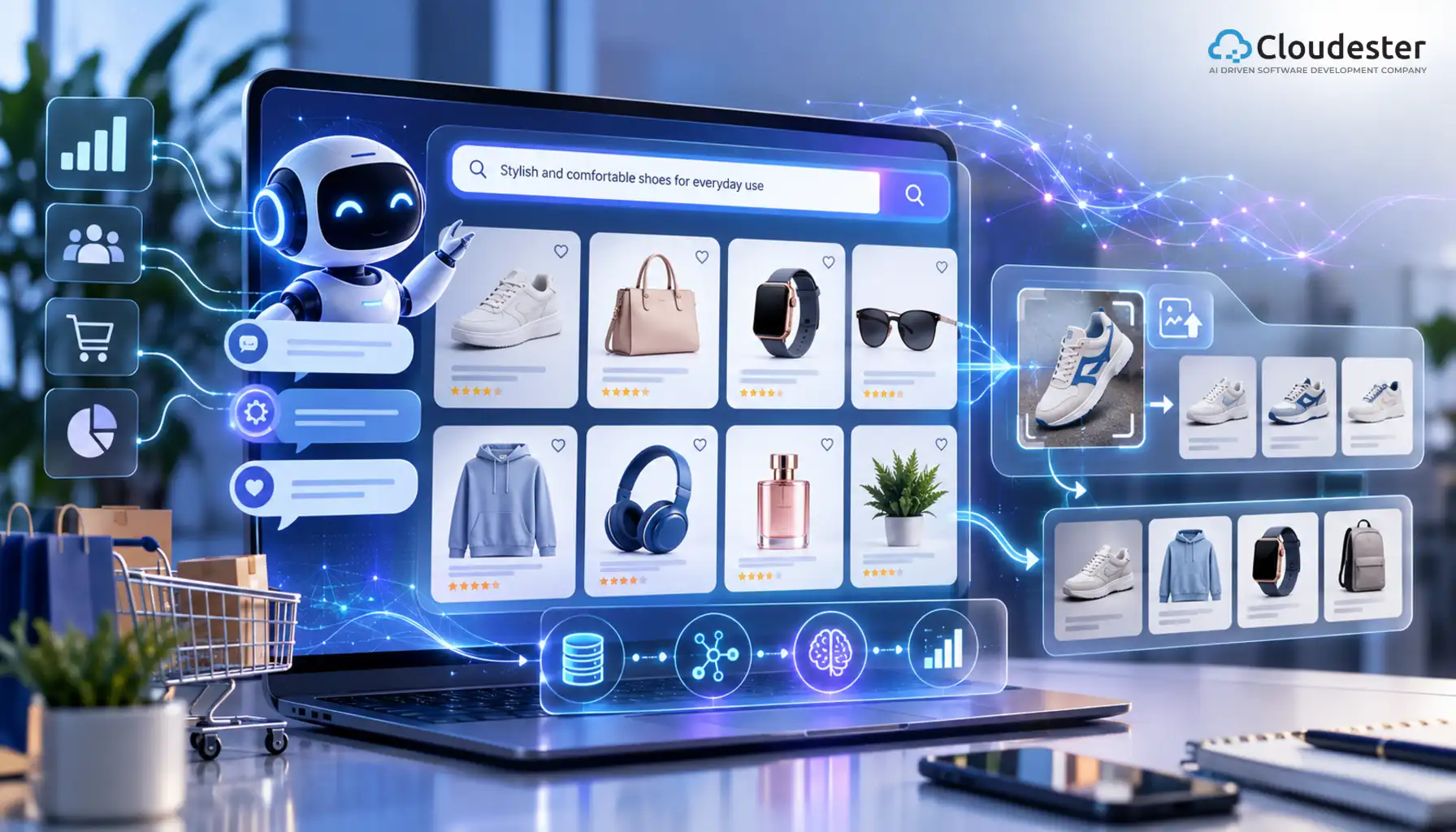
AI Generated. Credit: ChatGPT
The rising role of artificial intelligence (AI) is bringing significant advancements in product discovery in e-commerce by integrating high levels of conversational intent and enabling contextual understanding. The implementation of natural language processing helps provide AI-powered product recommendations to customers based on their specific needs and personalized preferences in e-commerce. AI shopping assistants are also playing a vital role in AI product discovery by allowing customers to compare different product options and closely review them to make informed purchase decisions. AI in eCommerce is becoming increasingly popular because of its ability to offer personalized shopping experiences through visual search, machine learning algorithms, and AI shopping assistants.
For software teams in eCommerce, AI product discovery is not merely a UX trend, but an architectural challenge that consists of recommendation engines, advanced search infrastructure, and data pipelines. AI product discovery has become a major competitive requirement in the current times rather than a mere experiment done by eCommerce brands.
Earlier, product discovery focused on structured navigation, including keyword-based search bars. This only worked effectively when the product catalogs were very limited, and consumer purchase intent was simple. In recent times, eCommerce stores have thousands of products, and the preferences of consumers have also become highly specific and conversational.
Recent industry data depicts that a significant number of shoppers depend on AI technology for making purchase decisions. Consumers are relying on AI product discovery as well as personalized product recommendations for making purchases.
Below are some of the key forces that are evolving product discovery with changing consumer behavior.
This is the evolved environment where the new AI product discovery systems operate, which is less about basic product searching and navigation and more about real-time interpretation. AI product discovery has now become the need of the hour and a core infrastructural aspect for eCommerce brands to build a competitive edge.
In advanced product discovery systems, AI-powered search as well as AI-powered product recommendations are the two major pillars that improve the eCommerce shopping experience for consumers.
Unlike traditional search systems, AI-powered search uses natural language processing and vector-based semantic matching. This helps shoppers find relevant products even when their search terms do not appear in the product listing.
AI-powered product discovery goes beyond simple keyword matching. Advanced search systems can understand the meaning and context behind a shopper’s query. This makes product search more accurate and relevant.
For example, Ubuy.com uses SearchMate, an AI-powered chatbot. It assists customers throughout their shopping journey.
SearchMate at Ubuy helps with effective query resolution regarding brands & products, tracking orders, and provides a personalized eCommerce experience.
AI-driven recommendation systems help enhance search by highlighting and recommending products to shoppers based on their browsing behavior and purchasing history. Advanced AI-driven recommendations integrate different techniques:
Advanced computer vision allows shoppers to search using photos instead of text. Through this, consumers can share an image of their preferred products such as clothes or shoes, and AI algorithms closely analyze the patterns, shapes, and colors to recommend visually similar products from the SKUs. This is a classic example of an AI-driven personalized shopping experience. Platforms like Cloudester provide machine learning development and AI development services that assist eCommerce brands in integrating visual search and image recognition features that help drive AI product discovery and give a personalized experience to the shoppers.
AI-powered product recommendations familiarise shoppers with products and services that they are not actually looking for, but align with their search intent. Smart AI-driven recommendations utilize:
The business impact of AI product discovery and recommendations can be significant. eCommerce stores can use AI recommendation engines and advanced search to help increase order values. They can also encourage longer shopping sessions compared with stores using static merchandising.
AI has no relevance without the right kind of data. Personalized product recommendations require data from multiple sources. This data helps improve AI product discovery and create a better shopping experience for consumers.
The key challenge is not simply collecting data. It is integrating that data into a reliable customer profile. This allows the recommendation engine to use the data effectively and deliver relevant results faster. This mainly needs:
If done competently, this infrastructure helps in offering a personalized eCommerce experience and improves AI product discovery for the customers.
High personalization through the use of AI can invite more scrutiny and consumer skepticism.
Consumers value personalized recommendations. However, they often worry about how eCommerce stores use their data. Data protection frameworks such as CCPA and GDPR have made privacy a major requirement. These frameworks also affect AI usage and data collection.
AI adoption continues to grow across eCommerce. Personalized shopping experiences are one of its key benefits. However, many consumers remain concerned about AI systems using their data. Some also question how these systems make autonomous decisions.
Teams developing AI product discovery systems must prioritize privacy and safety. These aspects should be built into the system architecture from the start. They should not be treated as secondary requirements.
eCommerce stores that integrate privacy-conscious design into their AI infrastructure can gain a competitive advantage. They can also build greater trust among consumers.
For eCommerce platforms looking to improve AI product discovery, here are some practical tips. These strategies can deliver quick results and improve overall AI-powered systems.
Businesses without dedicated in-house AI systems often work with AI development partners. These partners help build reliable AI infrastructure for effective AI product discovery. They also support AI-driven recommendations and personalized eCommerce experiences.
Also read: Artificial Intelligence Solutions for Business
AI product discovery is more than just a feature. It is transforming how eCommerce platforms respond to changing consumer needs and shopper intent. Real-time recommendations and personalized shopping improve the customer journey. Semantic search also helps shoppers find relevant products faster. AI technology is evolving rapidly and becoming core eCommerce infrastructure. Businesses that adopt AI product discovery can gain a competitive advantage. They should also follow clear and privacy-focused data practices.





We specialize in creating high-performance web and mobile apps, seamlessly integrating them with your existing systems to enhance user experiences and streamline business operations.
85 Delancey St, New York NY 10002, United States