Software Solutions for Small Business: Types, Benefits & Best Tools in 2026
February 08, 2026
By Cloudester Team
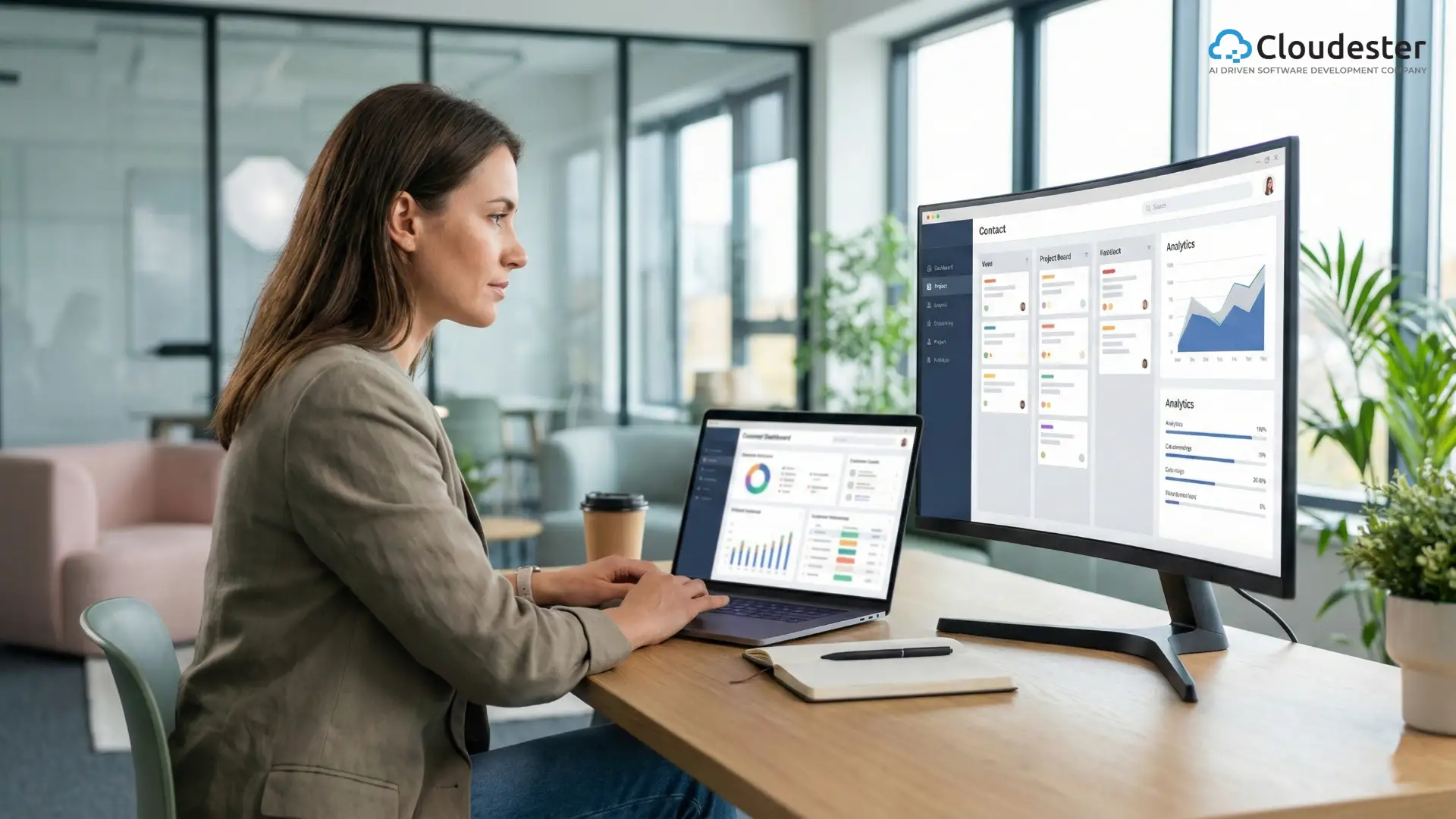
AI Generated. Credit: Google Gemini
Running a small business today is no longer possible with spreadsheets, manual paperwork, and disconnected tools. From managing finances and employees to handling customers and daily operations, small businesses need smart, scalable, and cost-effective technology. This is where software solutions for small business play a crucial role.
In this blog, you will learn what software solutions are, why they matter, and how small businesses can use them to increase efficiency, reduce costs, and compete with larger enterprises. This blog is designed to help business owners, founders, and decision-makers choose the right solutions for sustainable growth in 2026 and beyond.
What Are Software Solutions for Small Business?
Software solutions for small business are digital tools and applications designed to help small organizations manage operations, automate tasks, and improve productivity. These solutions cover areas such as accounting, HR, sales, customer management, project tracking, and reporting.
Unlike enterprise software, small business software solutions are typically:
- Easy to use
- Cost-effective
- Scalable
- Cloud-based or custom-built
- Designed for limited teams and budgets
They help businesses replace manual processes with automated workflows, allowing owners to focus on growth rather than daily administrative tasks.
Why Small Businesses Need Software Solutions Today
The modern business environment is highly competitive. Customers expect faster responses, personalized experiences, and reliable service. At the same time, small businesses must control costs and operate efficiently.
Here’s why investing in the right software solutions is no longer optional:
- Manual processes slow down operations and increase errors
- Data scattered across tools leads to poor decision-making
- Customer expectations continue to rise
- Remote and hybrid work models require digital systems
- Compliance and data security requirements are increasing
With the right software in place, small businesses can operate smarter, faster, and more securely.
Key Benefits of Software Solutions for Small Business
1. Improved Operational Efficiency
Software automates repetitive tasks such as invoicing, payroll, lead tracking, and reporting. This reduces manual effort and allows teams to focus on high-value work.
2. Cost Savings Over Time
While software may seem like an expense initially, it significantly reduces long-term operational costs by minimizing errors, reducing manpower needs, and improving productivity.
3. Better Decision-Making
Most software solutions provide dashboards and reports that give real-time insights into business performance, helping owners make informed decisions.
4. Scalability and Flexibility
Modern software grows with your business. You can start with basic features and upgrade as your needs expand without replacing the entire system.
5. Enhanced Customer Experience
CRM, support, and communication tools help businesses respond faster, personalize interactions, and build long-term customer relationships.
Cloud-Based vs Custom Software Solutions for Small Business
Small businesses usually choose between cloud-based software and custom software solutions. Understanding the difference is critical before making a decision.
Cloud-Based Software Solutions
These are ready-to-use platforms available on a subscription basis.
Advantages:
- Quick deployment
- Lower upfront costs
- Regular updates and maintenance
- Ideal for startups and early-stage businesses
Limitations:
- Limited customization
- Dependency on third-party platforms
- May not fit unique workflows
Custom Software Solutions for Small Business
Custom software is designed specifically around a business’s processes, goals, and industry requirements.
Advantages:
- Tailored to exact business needs
- Better integration with existing systems
- Higher data control and security
- Long-term scalability
Limitations:
- Higher initial investment
- Longer development time
For businesses with unique operations or growth plans, custom software often delivers better ROI in the long run.
Common Challenges Small Businesses Face Without Software Solutions
Many small businesses delay adopting software due to cost concerns or lack of technical knowledge. However, operating without proper tools creates serious challenges:
- Time wasted on manual work
- Inaccurate financial tracking
- Poor customer follow-ups
- Limited visibility into performance
- Difficulty scaling operations
These issues directly impact profitability and growth, making software adoption a strategic necessity rather than a technical upgrade.
Custom AI Software Development Solution For Enterprises
How Software Solutions Support Business Growth
Software solutions for small business act as a growth enabler rather than just operational tools. They create structured workflows, improve collaboration, and provide data-driven insights that help businesses:
- Expand into new markets
- Improve service quality
- Increase customer retention
- Optimize costs
- Compete with larger companies
With the right technology foundation, small businesses can grow confidently without operational chaos.
Types of Software Solutions for Small Business
Small businesses operate across multiple functions, and no single tool can handle everything efficiently. That’s why modern organizations rely on a combination of specialized software solutions tailored to different operational needs. Below are the most important categories of software solutions for small business, explained with real-world relevance.
Accounting & Finance Software Solutions for Small Business
This is one of the most critical functions for any small business. Accounting software solutions for small business help automate financial tasks, reduce errors, and ensure compliance with tax regulations.
Key capabilities include:
- Invoicing and billing automation
- Expense tracking and reconciliation
- Tax calculation and reporting
- Cash flow monitoring
- Financial dashboards
Many modern platforms also support embedded finance solutions for small business software, enabling features like digital payments, automated payouts, lending integrations, and real-time financial insights directly within business applications.
Best suited for:
Retailers, service providers, startups, freelancers, and growing SMEs.
HR & Payroll Software Solutions for Small Business
Managing employees manually becomes increasingly complex as a business grows. HR software solutions for small business centralize employee data and automate workforce management.
Core features include:
- Employee onboarding and records
- Payroll processing
- Attendance and leave management
- Performance tracking
- Compliance and statutory reporting
HR software reduces administrative overhead and helps business owners focus on team development rather than paperwork.
Best suited for:
Businesses with 5+ employees, remote teams, and compliance-heavy industries.
CRM & Sales Management Software Solutions for Small Business
Customer relationships are the backbone of small business growth. Sales lead management software solutions for small business help track prospects, manage pipelines, and improve conversion rates.
Key benefits include:
- Centralized customer data
- Lead tracking and scoring
- Sales pipeline visibility
- Follow-up reminders
- Sales performance reporting
CRM systems ensure no lead falls through the cracks while providing insights into customer behavior and buying patterns.
Best suited for:
Sales-driven businesses, B2B companies, service providers, and agencies.
Project & Workflow Management Software
As teams and projects grow, managing tasks through emails or spreadsheets becomes inefficient. Project management software brings structure and accountability to daily operations.
Key features include:
- Task assignment and tracking
- Project timelines and milestones
- Team collaboration
- Resource planning
- Progress reporting
These tools improve transparency and ensure projects are delivered on time and within budget.
Best suited for:
Agencies, IT services, construction, consulting, and creative teams.
Inventory & Vendor Management Software Solutions
For product-based businesses, managing inventory and suppliers efficiently is essential. Vendor and inventory software help track stock levels, manage supplier relationships, and prevent losses.
Common functionalities include:
- Real-time inventory tracking
- Vendor database management
- Purchase order automation
- Stock alerts and forecasting
- Cost optimization insights
These solutions help small businesses avoid overstocking, stockouts, and supplier delays.
Best suited for:
Retail, manufacturing, wholesale, and eCommerce businesses.
Customer Support & Communication Software
Customer experience plays a major role in brand loyalty. Support software helps small businesses manage customer inquiries efficiently across multiple channels.
Key features include:
- Ticket management systems
- Live chat and chatbot support
- Email and messaging integration
- Customer feedback tracking
- Response time analytics
These tools ensure faster responses and consistent communication.
Best suited for:
Service businesses, SaaS companies, and customer-focused brands.
Industry-Specific Software Solutions for Small Business
Some businesses require specialized software tailored to industry workflows and compliance needs.
Examples include:
- Healthcare management systems
- Real estate CRM platforms
- Logistics and transportation software
- Education and training management systems
- Oil and gas accounting software for small business solutions
Industry-specific software eliminates unnecessary features while addressing niche requirements more effectively.
How Small Businesses Combine Multiple Software Solutions
Most small businesses don’t rely on a single platform. Instead, they build a connected software ecosystem.
A typical setup might include:
- Accounting software for finances
- CRM for customer management
- HR software for employees
- Project management for operations
Integration between these tools ensures smooth data flow and eliminates duplication.
Custom Software Solutions vs Multiple Tools
As businesses grow, managing multiple off-the-shelf tools can become expensive and inefficient. This is where custom software solutions for small business offer a competitive advantage.
Custom solutions can:
- Combine multiple functionalities into one platform
- Match exact workflows
- Reduce subscription costs
- Improve data security and ownership
This approach is especially useful for businesses with complex operations or long-term growth plans.
How to Choose the Right Software Solutions for Small Business
Choosing the right software solutions for small business depends on more than just price or popularity. The ideal solution should align with your business goals, workflows, and future growth plans.
1. Understand Your Business Needs
Start by identifying the problems you want to solve. Whether it’s accounting accuracy, sales tracking, HR compliance, or operational efficiency, clarity ensures you invest in the right solution.
2. Set a Realistic Budget
Consider both short-term and long-term costs. Subscription fees, customization, integrations, training, and support should all be factored into your decision.
3. Check Scalability and Flexibility
Your software should grow with your business. Avoid tools that limit users, features, or data as you expand.
4. Evaluate Integration Capabilities
Ensure the software integrates smoothly with existing systems such as accounting tools, CRM platforms, or payment gateways.
5. Prioritize Security and Compliance
Look for software that offers data encryption, role-based access, and compliance with industry regulations.
Best Software Solutions for Small Businesses in 2026
The best software solutions for small businesses are those that balance usability, scalability, and cost-effectiveness. Instead of chasing trends, small businesses should focus on solutions that deliver measurable value.
Common traits of top-performing software include:
- Cloud-based accessibility
- User-friendly interfaces
- Strong customer support
- Customization options
- Reliable reporting and analytics
Rather than adopting multiple disconnected tools, many growing businesses now prefer integrated or custom-built solutions that reduce complexity and improve efficiency.
Custom vs Off-the-Shelf Software Solutions for Small Business
Both custom and off-the-shelf software solutions have their place. The right choice depends on your operational complexity and long-term vision.
Off-the-Shelf Software
- Faster to implement
- Lower upfront costs
- Best for standard business processes
Custom Software Solutions
- Built around unique workflows
- Easier integration with existing systems
- Higher long-term ROI
- Better data ownership and security
For businesses planning rapid growth or requiring industry-specific features, custom software becomes a strategic investment rather than an expense.
How Cloudester Helps Small Businesses with Software Solutions
Cloudester helps small businesses design and build scalable, secure, and future-ready software solutions. From consultation to development and long-term support, Cloudester focuses on delivering technology that aligns with business objectives.
Whether a business needs:
- Custom software solutions for small business
- Integrated accounting, HR, and CRM platforms
- Embedded finance solutions
- Industry-specific applications
Cloudester works closely with clients to deliver tailored solutions that drive efficiency and growth.
Also read: Can Small Businesses Benefit from AI Application Development?
FAQs: Software Solutions for Small Business
1. Which software solutions work best for small businesses?
The best software solutions for small business depend on industry, size, and goals. Accounting, CRM, HR, and project management software are essential for most small businesses.
2. Are software solutions for small business expensive?
Most modern software solutions are affordable and scalable. Cloud-based tools offer subscription pricing, while custom solutions provide better long-term value for growing businesses.
3. What is the most important software for a small business?
Accounting software is often the most critical, followed by CRM and HR software, as they directly impact financial management and customer relationships.
4. Are custom software solutions good for small businesses?
Yes, custom software solutions are ideal for small businesses with unique workflows, integration needs, or long-term growth plans.
5. How does Cloudester support small businesses with software solutions?
Cloudester provides end-to-end software development services, helping small businesses plan, build, and scale custom software solutions tailored to their needs.
Final Thoughts
Software solutions for small business are no longer optional, they are essential for efficiency, scalability, and competitiveness. By choosing the right mix of tools or investing in custom software, small businesses can streamline operations, enhance customer experience, and achieve sustainable growth.
With a clear strategy and the right software technology partners, small businesses can confidently navigate the future and compete in a digital-first economy.
Back
Latest posts
March 25, 2026