
August 24, 2026
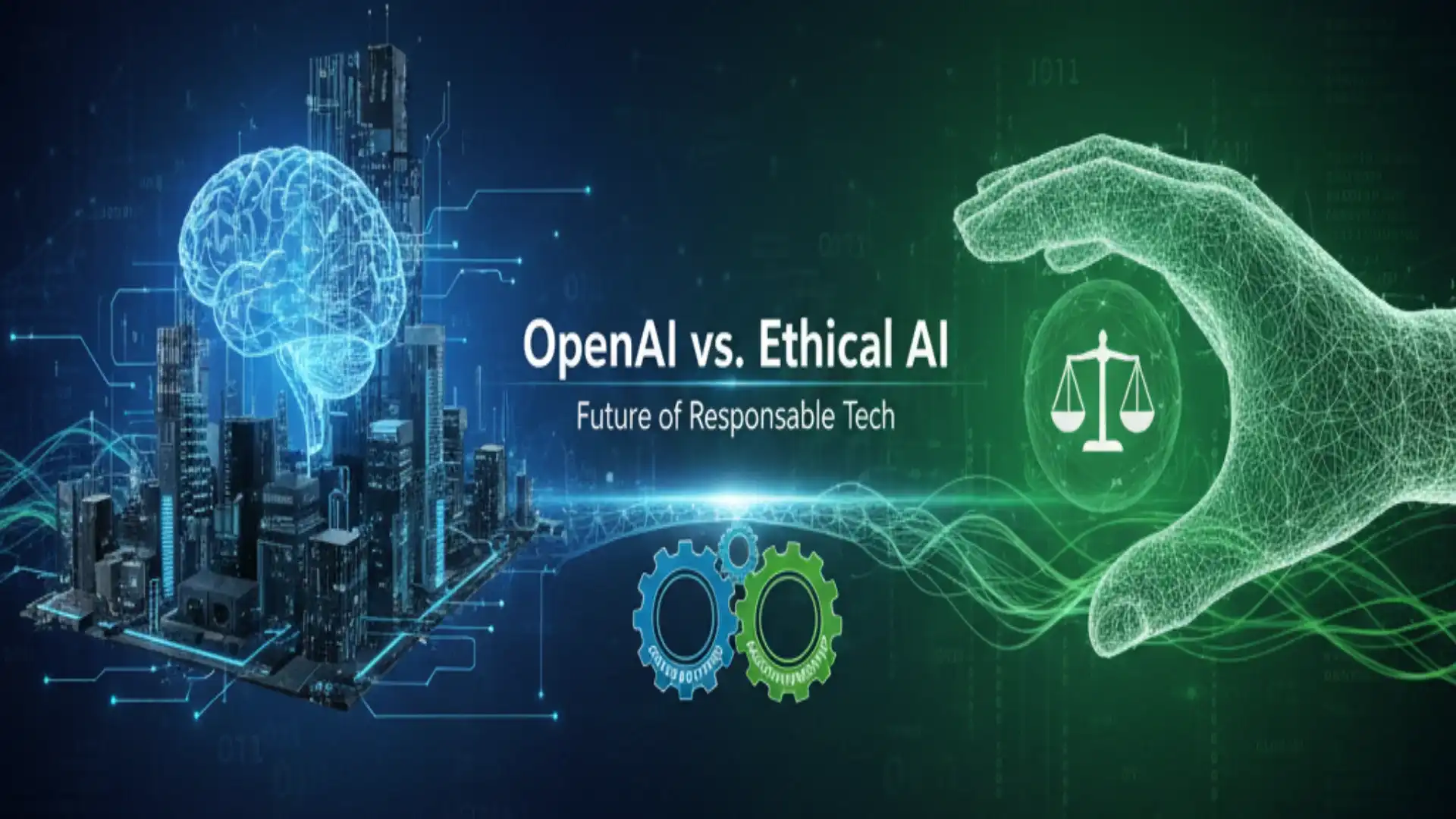
AI Generated. Credit: Google Gemini
As we all know, the speed of AI innovation today is dizzying. Companies like OpenAI are hitting us with groundbreaking tech every few months, fundamentally reshaping what we thought was possible.
This potential is staggering, but it forces a question we can’t dodge: How do we make sure these powerful tools are built and deployed to help humanity, not hurt it? That, my friends, is the urgent job of ethical AI.
At its core, software programming with AI isn’t just about the lines of code you write. It’s the craft of building intelligent systems that respect human values, follow the rules, and actually minimize the chances of a negative impact on people’s lives.
Why does this matter so much right now? Because the fancy capabilities of AI programming tools are flying out of the research labs and straight into the systems that run our world: hiring, healthcare, and public safety. We’re adopting this tech faster than we can agree on the ethical ground rules.
In today’s blog, we are going to break down the biggest challenges, show you the responsible approaches developers are using, and talk about what it takes to build a truly accountable AI future.
OpenAI has been revolutionary. Their large language models and generative AI have given us superpowers: writing complex code, generating stunning visuals, and having sophisticated conversations. It’s incredible to witness the sheer scale and value of this technology.
The use cases are genuinely transformative. This AI accelerates scientific discovery, turbocharges content creation, and provides powerful problem-solving across finance and engineering. But this intense acceleration in AI in software development underscores the urgent need for equally powerful ethical brakes. We need to pair that speed with an unbreakable commitment to ethical AI.
As these intelligent systems become more central to our lives, we run into some serious roadblocks:
This is a gut-check issue. AI bias happens because the massive training datasets are not neutral; they are loaded with the same biases and inequalities that exist in our society, gender, racial, and economic. When the AI learns from this flawed mirror, it doesn’t just reflect prejudice; it can amplify it, leading to discriminatory outcomes in job screening or loan applications. We need smart AI safety measures to catch this.
We can’t stand “black box” choices with respect to individuals’ lives. Extremely complicated AI models make choices that usually cannot be traced or completely understood by a human being. This Transparency and Explainability (XAI) deficiency dismantles trust and renders genuine responsibility a living nightmare, particularly in regulated sectors.
Creating advanced AI is data-hungry as it involves devouring huge amounts of personal and proprietary data. That requirement poses enormous risks: surveillance, data theft, and abuse. If we hope to have people trust the future of good AI, we need to bake privacy by design into what we do.
The ability of generative AI to create realistic deepfakes and mass personalized propaganda is a serious threat to social stability and democracy. The potential for weaponization, whether for advanced cyberattacks or autonomous systems, means robust AI safety measures are an absolute must.
The battle against bias begins with improved practices: collecting more representative, diverse data, imposing strict algorithmic audits, and creating specialized bias detection software. The aim of employing responsible AI frameworks is to render bias mitigation an integral, non-compromisable aspect of the development process.
It’s time to stop just talking about problems and start building solutions. We need to integrate ethics deep into the DNA of the AI lifecycle.
There’s a growing convergence around fundamental AI governance principles worldwide. These principles are the guiding commandments: human control, technical soundness, privacy, justice, and responsibility. These ethical AI guidelines are the game plan for policy and regulation worldwide. Embracing these principles guarantees that innovative companies such as Cloudester Software can innovate at the edges of technology while being guided by the highest ethical ideals.
Regulation is finally catching up with innovation. Evolving policy and global collaboration are absolutely vital to steer ethical AI development. This formal governance provides the necessary structure to manage the broad impact of AI on society and ensure everyone is playing by the same rules.
Safety cannot be an afterthought; it must be the starting point. We need to design safeguards and “human in the loop” processes into every AI system from the beginning. This guarantees that control remains with human operators and that system safety is always prioritized over raw performance.
If you are writing the code, you hold the power. Your choices determine the ethical success of the system.
Actionable steps include building ethical review checkpoints right into your MLOps pipelines. Make sure you use interpretability tools (XAI) to analyze your model’s decisions, and actively collaborate with non-developers like ethicists and domain experts. Being an ethical AI developer means adopting practices that force you to consider failure modes and misuse scenarios long before deployment.
Cloudester Software prioritizes these practices, ensuring every project is guided by the strictest standards of ethical coding and accountability.
The future of responsible AI is not a spectator sport; it’s an active building project we all have in common. It requires us to scale technology, hold ourselves accountable, and act with humanity.
Keep in mind this: Ethical AI is not a handbrake holding you back. It’s the fundamental prerequisite for effective, reliable, and positive innovation.
We urge the architects and engineers of this new world to strongly take an ethical approach to every project, to read about and study responsible AI frameworks, and to join the broader debate. Now, ask us: What is your biggest concern about the ethical future of AI? Let’s continue the conversation.


We specialize in creating high-performance web and mobile apps, seamlessly integrating them with your existing systems to enhance user experiences and streamline business operations.
85 Delancey St, New York NY 10002, United States