The Intelligent Edge: AI-Infused Custom Software Development for Success
January 16, 2024
By Cloudester Team
The future of software development undoubtedly lies at the intersection of artificial intelligence and customization. As the intelligent edge grows in prominence, businesses now have the opportunity to leverage AI and thus transform their custom software development processes, driving new levels of digital success. In this article, we will therefore explore how AI-infused custom software development can unlock new possibilities, while simultaneously helping businesses stay ahead in a rapidly evolving digital landscape.
By infusing AI into the development process, organizations can create intelligent software solutions that are capable of learning, adapting, and improving over time. Consequently, this advanced intelligence allows businesses to deliver more personalized experiences to users, enhance productivity, and ultimately make data-driven decisions with greater accuracy.
With the right AI-infused custom software, companies are able to automate repetitive tasks, optimize workflows, and extract valuable insights from vast volumes of data. Not only does this save time and resources, but it also empowers businesses to make smarter and more informed decisions.
Therefore, join us as we dive into the world of the intelligent edge and discover how AI-infused custom software development can pave the way for success in the digital age.
Understanding the Intelligent Edge
The intelligent edge refers to the ability of devices and systems to perform data processing and analysis at or near the source of data generation. In a decentralized approach, this brings AI capabilities closer to devices and users, thereby enabling real-time decision-making without depending entirely on a centralized cloud infrastructure.
By leveraging the intelligent edge, businesses can minimize latency, enhance security, and improve overall system performance. Consequently, AI-infused custom software development plays a crucial role in enabling the intelligent edge by providing the necessary tools and technologies to build intelligent applications that can operate directly at the source.
The Impact of AI on Custom Software Development
AI has revolutionized the field of custom software development by enabling developers to create intelligent applications that can understand, learn, and make predictions based on data. Whereas traditional software development focused on predefined rules and logic, AI-infused custom solutions, on the other hand, introduce the ability to learn from experience and adapt to changing circumstances.
Additionally, AI algorithms now analyze large datasets, identify valuable patterns, and deliver actionable predictions—enabling businesses to gain critical insights and thus make more informed, data-driven decisions. As a result, this new level of intelligence empowers custom software solutions to offer more personalized experiences, automate complex tasks, and improve overall operational efficiency.
Benefits of AI-Infused Custom Software Development
The benefits of AI-infused custom software development are vast and, collectively, can have a significant impact on business success. For instance, here are some key advantages:
Personalized Experiences: By leveraging AI, custom software solutions can analyze user behavior, preferences, and context in order to deliver tailored experiences. As a result, user satisfaction increases, and customer loyalty is reinforced.
Automation and Optimization: AI-infused custom software streamlines repetitive tasks, optimizes workflows, and minimizes human error. This, in turn, leads to improved productivity, cost savings, and greater operational efficiency.
Data-driven Decision Making: AI algorithms can efficiently process and analyze vast amounts of data so as to provide meaningful insights and predictions. Thus, businesses are enabled to make informed choices, spot trends, and react to emerging opportunities in real-time.
Enhanced Security: AI can identify and prevent security threats by analyzing patterns and anomalies as they occur. Accordingly, this strengthens the security of custom software solutions and protects sensitive data.
Custom AI Software Development Solution For Enterprises
Key Technologies Driving the Intelligent Edge
Several key technologies are now driving the intelligent edge and, consequently, enabling AI-infused custom software development. Indeed, these technologies work together in synergy to build intelligent applications that can operate at the edge. Here are some of the key technologies:
Machine Learning: Machine learning algorithms allow software solutions to learn directly from data and therefore make predictions or decisions without explicit programming. As such, this is at the heart of AI-infused custom software development.
Edge Computing: Edge computing means processing and analyzing data at the edge of the network, closer to its source. This significantly reduces latency and enhances system performance, thereby enabling real-time decision-making.
Internet of Things (IoT): IoT devices generate massive volumes of data, and AI-infused custom software can process and analyze this data, extracting valuable insights. Moreover, IoT devices at the edge can directly interact with AI models, empowering intelligent decision-making.
Natural Language Processing (NLP): NLP equips software with the ability to understand and interpret human language. Especially for building AI-powered chatbots and virtual assistants, this technology enables human-like interaction.
Steps to Implement AI-Infused Custom Software Development
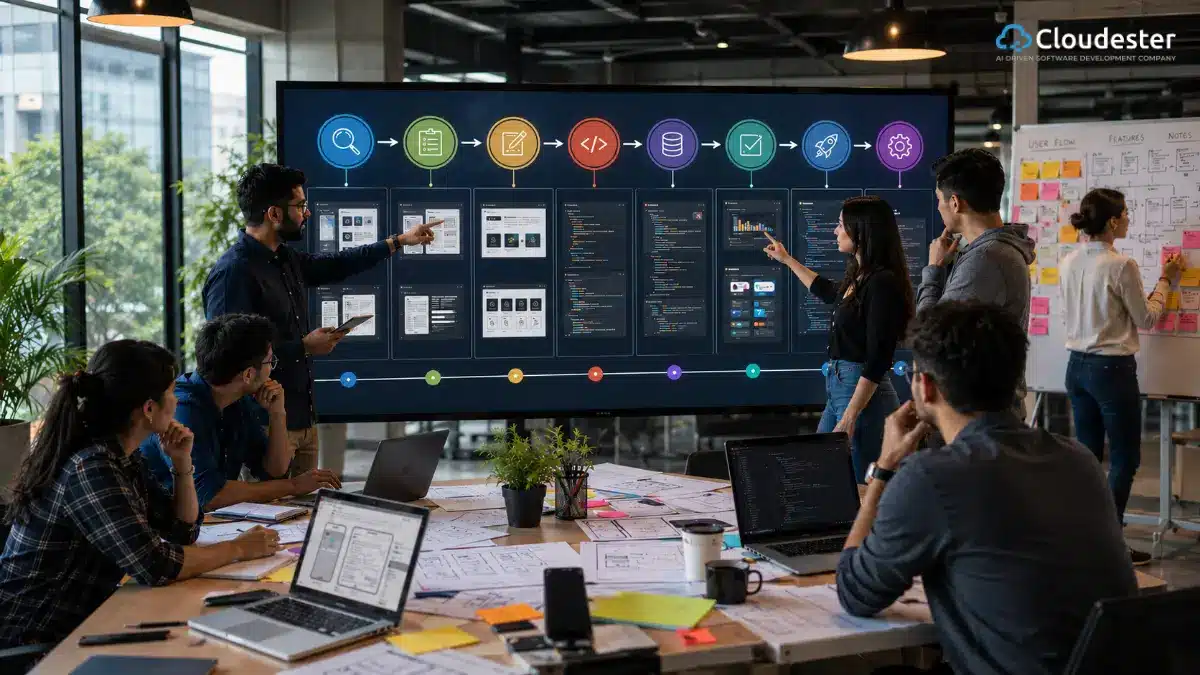
Implementing AI-infused custom software development requires thoughtful planning and systematic execution. Consequently, below are key steps to follow:
Identify Business Needs: Evaluate business needs and challenges that AI-infused development can address. First, start with a thorough review of current processes, workflows, and data sources.
Data Collection and Preparation: Aggregate the necessary data from all relevant sources and prepare it for analysis. This step includes cleaning the data and ensuring its integrity.
Algorithm Selection and Training: Choose the right machine learning algorithms based on the specific business problem. Then, train these algorithms with collected data to create AI models capable of making predictions or decisions.
Integration and Deployment: Integrate the AI models into the tailored software solution and proceed with deployment. At this stage, integrating with existing infrastructure and carefully testing the solution are critical for scalability and robust performance.
Monitoring and Continuous Improvement: After deployment, continuously monitor performance and analyze user feedback. By doing so, you can refine the AI models, optimize the algorithms, and expand data sources to enhance results over time.
Challenges and Considerations in AI-Infused Custom Software Development
Although AI-infused custom software development offers numerous benefits, it also presents unique challenges. Consequently, keep these key considerations in mind:
Data Quality and Availability: Effectiveness depends on high-quality, readily available data. Acquiring and maintaining suitable data is complex, especially with large and variable datasets.
Ethical and Legal Considerations: AI-powered applications bring forth ethical and regulatory concerns, particularly when sensitive data or consequential decisions are involved. Therefore, ensuring compliance and adopting ethical AI practices guarantees safe and responsible use.
Skills and Expertise: Developing AI-infused solutions calls for specialized skills in machine learning, data analysis, and software engineering. As a result, investing in training or seeking expert collaboration can help bridge skill gaps.
Integration with Existing Systems: Seamless integration with current systems presents technical hurdles, such as ensuring compatibility, synchronizing data, and optimizing performance.
Successful Case Studies of AI-Infused Custom Software Development
To fully appreciate the potential, let’s consider some successful case studies. For example:
Personalized Marketing: AI-powered recommendation engines in e-commerce, like those used by Amazon, analyze user preferences to deliver personalized product suggestions. As a result, both sales and customer satisfaction have increased.
Predictive Maintenance: AI algorithms analyze sensor data from machines to forecast potential failures, thus enabling proactive maintenance. For instance, General Electric’s aircraft engine maintenance program demonstrates this approach’s effectiveness.
Healthcare Diagnosis: AI-powered diagnostic systems analyze medical images and patient data to assist doctors, as seen in IBM’s Watson for Oncology platform.
Choosing the Right Development Partner for AI-Infused Custom Software
Selecting a capable development partner is essential for success. Therefore, here’s what to look for:
Expertise and Experience: Choose a partner with proven expertise in AI, custom software development, and familiarity with your industry.
Collaboration and Communication: Prioritize partners who value collaborative projects, open communication, and keep you engaged with regular updates.
Portfolio and References: Carefully review portfolios and reference case studies relating to AI-infused software success.
Agile Development Approach: Since AI solutions must remain flexible, work with partners applying iterative development, rapid feedback loops, and adaptable methods.
Future Trends in AI-Infused Custom Software Development
As AI technology continues to evolve, several trends are shaping its future. For example:
Explainable AI
As AI’s prevalence increases, so does the need for transparency. Explainable AI provides insight into how models reach decisions, thereby strengthening trust, identifying bias, and supporting regulatory compliance. By clarifying rationale and processes, explainable AI promotes acceptance and ethical use.
Edge AI
Because edge AI places models and processing on local devices, real-time decisions happen without cloud dependence. By reducing latency and bolstering privacy, edge AI empowers applications that demand instant response while minimizing security risks and supporting operational continuity.
AI Democratization
User-friendly tools are making AI accessible to non-experts, encouraging innovation and accelerating adoption. As more businesses and individuals harness AI, creativity and diversity in problem-solving accelerates accordingly. The spread of accessible platforms transforms advanced technology from an exclusive resource to a democratized one.
Ethical AI
With AI’s growing power, ethical priorities become ever more important. Ethical AI frameworks promote fairness, transparency, and accountability, addressing algorithmic bias and supporting responsible deployment. Furthermore, implementing such measures builds trust and supports sustainable integration of AI into society.
AI-infused custom software development is fundamentally reshaping business in the digital age. By harnessing AI technologies at the intelligent edge, organizations can create stronger personalized experiences, automate tasks, and make data-driven decisions with higher confidence.
Nonetheless, businesses must address challenges relating to data quality, regulatory compliance, skills acquisition, and seamless integration. Consequently, choosing the right development partner with expertise, experience, and a collaborative approach is critical for your project’s success.
Looking ahead, trends like explainable AI, edge AI, democratization, and ethical AI are set to define the next chapter of custom software development. Embracing these practices will certainly help businesses thrive in the age of intelligent software.
Thank you for joining us on this journey into the world of the intelligent edge and AI-infused custom software development.
FAQ’s
Why is AI integration crucial in custom software development?
AI integration is crucial because it delivers intelligent, adaptable, and predictive applications. By enhancing capabilities, software offers personalized experiences, automation, optimized workflows, and more accurate, data-driven decisions.
What are the primary benefits of using AI in custom software solutions?
Key benefits include personalized user experiences, automation, optimization, improved security, and greater efficiency. AI analyzes large datasets, learns from them, and adapts, thus opening new opportunities for business growth.
Which industries benefit the most from AI-infused custom software?
Major beneficiaries include:
- E-commerce (personalized marketing)
- Manufacturing (predictive maintenance)
- Healthcare (diagnostic systems)
- Financial services (fraud detection and risk analysis)
- Customer service (chatbots and virtual assistants)
- Logistics (supply chain visibility and route optimization)
- and more…
What AI technologies are commonly integrated into custom software?
Common tools include:
- Machine Learning
- Edge Computing
- IoT
- NLP
How does AI-driven customization enhance user experience and efficiency?
By analyzing user data, AI customizes software for better engagement and satisfaction. Furthermore, it improves operational efficiency through automation and reduces human error.
What are the key challenges associated with AI integration in custom software development?
Top challenges include:
- Data quality and availability
- Ethical and legal considerations
- Skills and expertise gaps
- Integration hurdles
- Compatibility and synchronization issues
What considerations should businesses keep in mind when opting for AI-infused custom software?
Businesses should evaluate their partner’s expertise, communication, agility, and portfolio. Moreover, they should prioritize ethical standards, regulatory compliance, and seamless integration.
How does data quality impact the effectiveness of AI in custom software solutions?
AI relies heavily on quality data; accurate, reliable, and relevant datasets are essential for optimal performance, informed predictions, and meaningful insights. Poor data results in poor outcomes, underscoring the need for robust data management.
Back
Latest posts

June 26, 2026